The inflatable vs traditional debate divides holiday decorators. Each has distinct advantages in different situations.
The Outdoor Display Decision
According to NFPA statistics, holiday decoration fires peak in December and January. Choosing the right display type affects both visual appeal and safety.
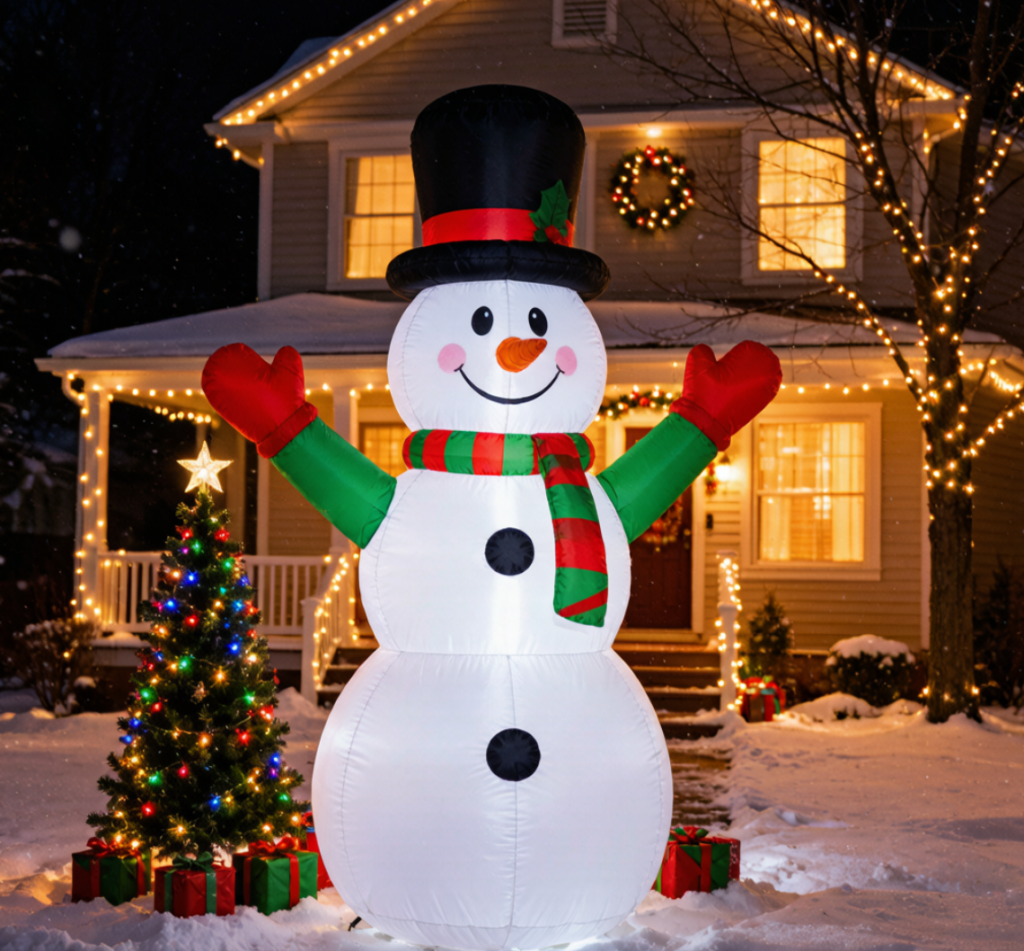
Inflatable Decorations
Advantages: Large size for low cost, fast setup (5-10 min with fan), impressive 3D presence, compact storage when deflated. Disadvantages: Requires electricity constantly (fan running), vulnerable to punctures and tears, can deflate in power outages, may fade after 2-3 seasons.
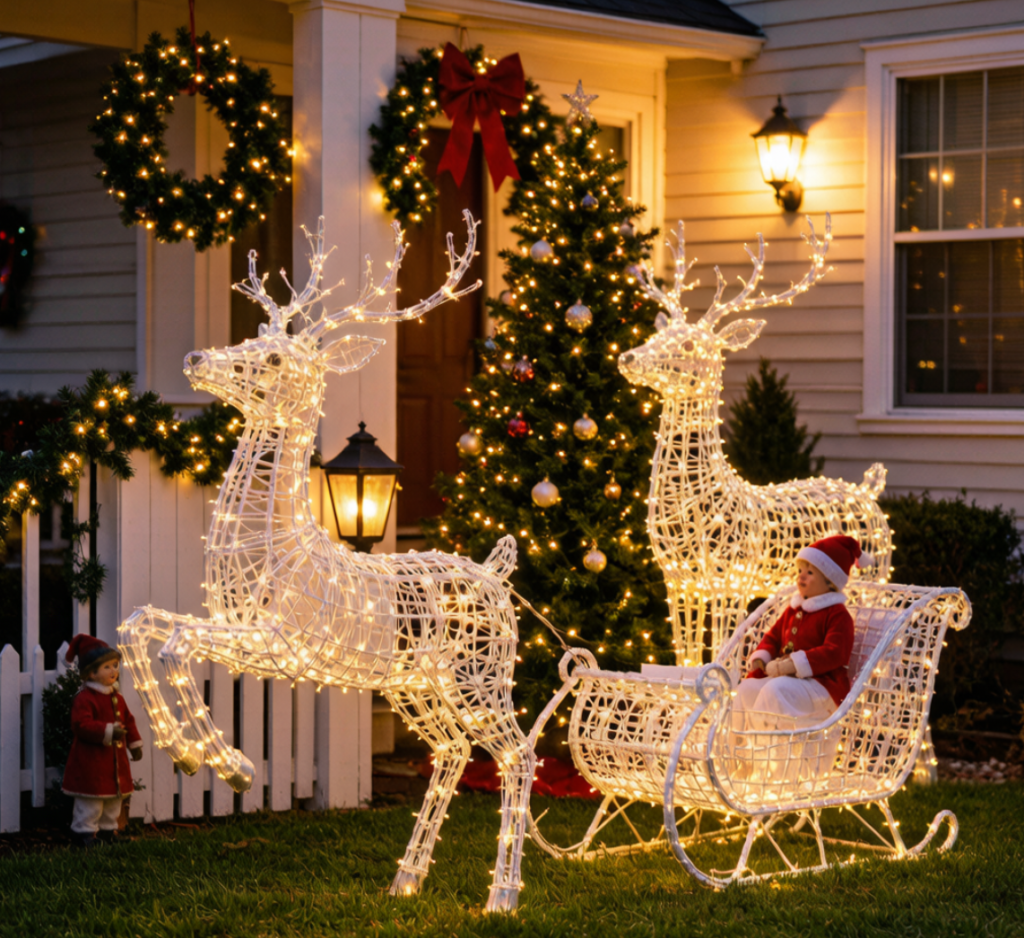
Traditional Displays
Traditional yard displays include light-up figurines, metal frames, wood cutouts, and illuminated wire forms. Advantages: Durable (last 5-15+ years), no ongoing power requirement for structural elements, more weather-resistant, repairable. Disadvantages: Larger storage space needed, heavier, often more expensive upfront for similar visual size.
Comparison Table
| Factor | Inflatable | Traditional |
|---|---|---|
| Setup time | 5-15 min | 15-60 min |
| Visual size per dollar | Highest | Moderate |
| Annual durability risk | Punctures, fan failure | Weather damage, bulb burn-out |
| Lifespan | 2-5 seasons | 5-15+ seasons |
| Storage volume | Small (deflated) | Large (rigid shapes) |
| Wind resistance | Low (can topple or tear) | High (rigid frames) |
Durability & Weather
Key durability factor: Inflatibles are the only decorations that are non-functional when not powered. A power outage deflates them completely. Traditional decorations remain visually present even without lights on. In windy areas, traditional displays are significantly more reliable.
Cost Analysis
Inflatable (8ft Santa): $60-150 upfront, $5-15/year electricity, replace every 3 years = $75-165 total over 3 years. Traditional (6ft lit frame): $100-300 upfront, $2-5/year electricity, lasts 10+ years = $120-350 total over 10 years. Traditional is 40-50% cheaper over the long term.
Storage Requirements
Inflatables: one medium tote (10-15 gallons). Traditional: one large tote for each major display piece. Storage space is a significant consideration for apartments and condos.
Visual Impact
Inflatables offer unmatched 3D presence — a 10ft inflatable snowman commands attention. Traditional displays offer more detailed craftsmanship, finer lighting, and timeless aesthetic appeal.
CGA Outdoor Display Solutions
Both styles available from CGA. We manufacture UL-certified inflatables with reinforced seams and auto-shutoff fans, plus durable traditional light-up displays with LED illumination. Perfect for wholesale, retail brands, and commercial projects.Explore CGA Outdoor →
FAQ
Which is better: inflatable or traditional?
Inflatables for quick setup, large size, easy storage. Traditional for durability, weather resistance, and long-term value.
Which lasts longer?
Traditional displays: 5-15+ years. Inflatables: 2-5 seasons depending on sun and wind exposure.
Which is cheaper?
Inflatables cost less upfront. Traditional displays cost less over 10+ years due to longer lifespan.
Do inflatables use a lot of electricity?
Inflatables use 50-150W (fan + lights), costing $5-15 per season. Traditional lit displays use similar or less power with LEDs.
Are inflatables safe in wind?
Most are rated for winds up to 30-35 mph. Inflatables should be taken down in high winds. Traditional displays are safe in much higher winds.
Conclusion
Choose inflatables for dramatic, easy-to-install displays where lifespan is less critical. Choose traditional displays for permanent, durable decorations that reward long-term investment. Many homeowners use both — inflatables as focal points with traditional elements for structure and lighting.