
The choice between warm white and cool white Christmas lights dramatically affects the look and feel of your holiday display. This guide explains the differences. For lighting products, see CGA Christmas.
The Color Temperature Concept
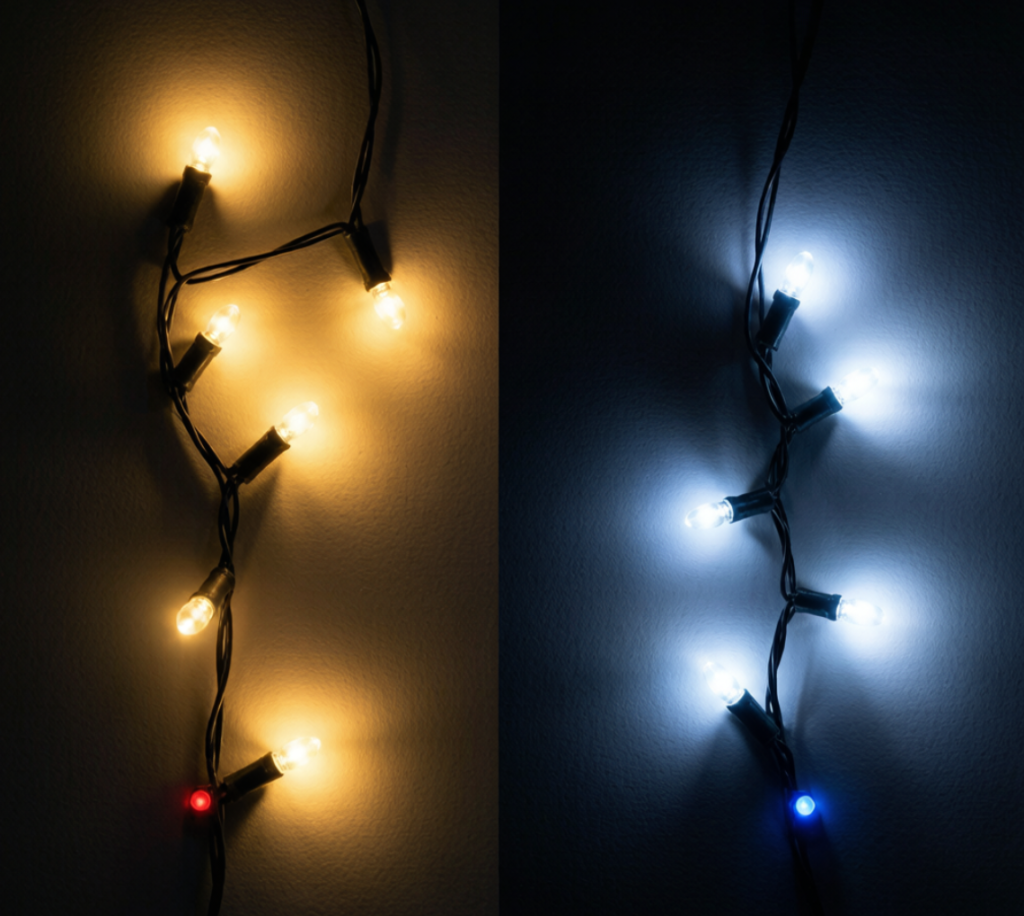
Color temperature, measured in Kelvin (K), describes whether light appears warm (yellowish) or cool (bluish). Lower K = warmer light. Higher K = cooler light.
The Energy Star program provides guidance on color quality for holiday light strings, measured by CRI (Color Rendering Index).
Warm White (2700-3000K)
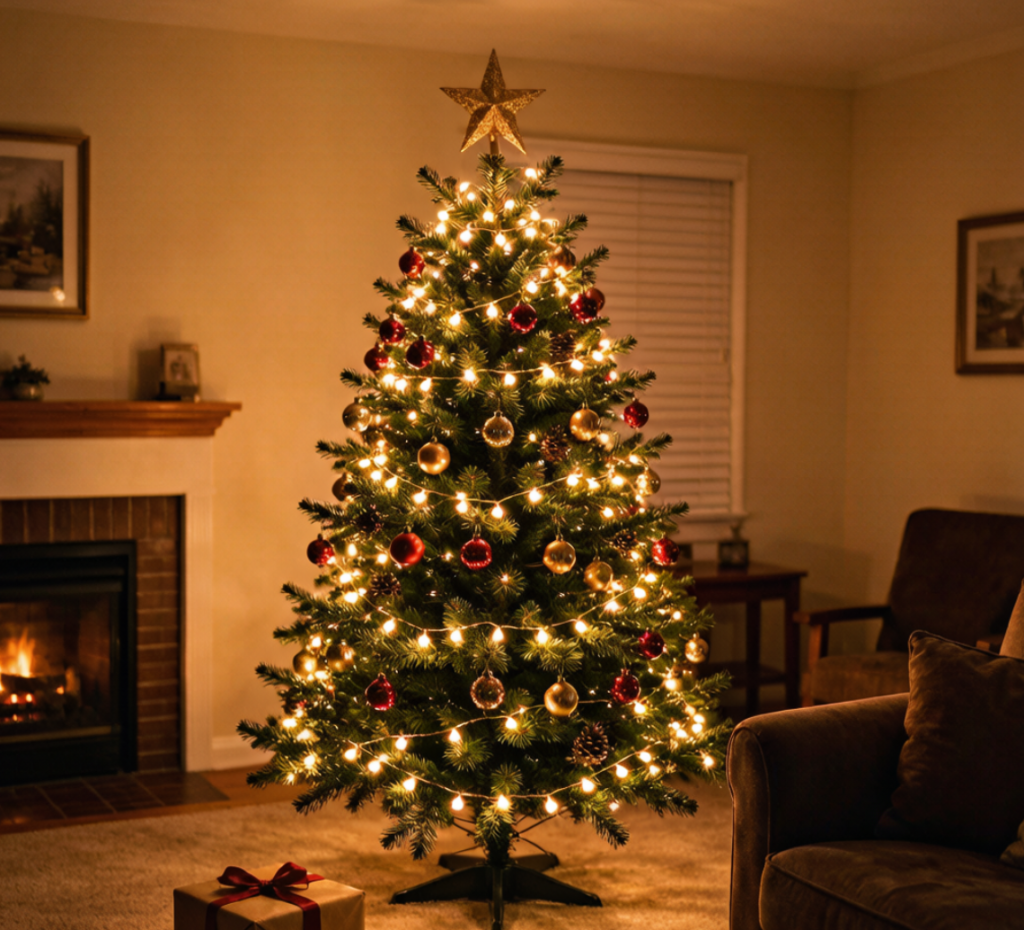
Classic holiday glow: Warm white matches the traditional incandescent Christmas light color. It creates a cozy, inviting atmosphere that most people associate with Christmas. Best for living rooms, dining areas, and front porches.
Cool White (4000-6500K)
Cool white is bright, crisp, and modern. It resembles daylight and creates a clean, contemporary look. Excels in outdoor applications where bright illumination is needed. Colder regions often prefer cool white as it contrasts beautifully with snow.
Comparison Table
| Factor | Warm White | Cool White |
|---|---|---|
| Kelvin range | 2700-3000K | 4000-6500K |
| Appearance | Golden, cozy | Bright, crisp |
| Best indoor use | Living room, bedroom, dining | Kitchen, bathroom, workspace |
| Best outdoor use | Porch, covered areas | Yard, trees, roofline |
| Suitability with snow | Good — warm contrast | Excellent — matches snow |
| Consumer preference | ~65% prefer warm white | ~35% prefer cool white |
Indoor Applications
Warm white dominates indoor tree decorating — 65-70% of consumers choose warm white for their main tree. Cool white is used for accent trees, modern displays, and areas where bright task lighting is desired.
Outdoor Applications
Cool white excels outdoors: it is brighter for roofline illumination, contrasts beautifully with dark winter nights, and appears cleaner against snow. Warm white creates a softer, more traditional outdoor ambiance for covered porches and entryways.
Mood & Atmosphere
Color temperature directly affects mood. Warm light signals relaxation and comfort. Cool light signals alertness and energy. Choosing the right color temperature for each space creates the desired emotional response.
Tips from Designers
- Use warm white for organic shapes (trees, garlands, wreaths)
- Use cool white for architectural lines (rooflines, windows, railings)
- Combining both can create depth — warm inside the tree, cool outside
- Dimmable LED strings allow adjusting brightness to perfect the ambiance
CGA Light Collections
Both warm white and cool white available from CGA. Our LED light strings feature consistent color temperature throughout the string, high CRI, and long-lasting performance. UL-certified, energy-efficient, and available for wholesale orders.Shop CGA Lights →
FAQ
Which is better: warm white or cool white?
Warm white for cozy indoor ambiance. Cool white for bright outdoor displays. Most households use both in different areas.
Which color temperature is most popular?
Warm white (~65% of consumers) for its traditional, nostalgic Christmas feel.
Can I mix warm and cool white?
Yes — many designers mix them. Warm inside the tree, cool for the roofline creates depth and interest.
Which is best for outdoor trees?
Cool white — brighter, better contrast with dark branches, and looks cleaner against snow.
Does color temperature affect energy use?
No — both use the same power. Color is determined by LED phosphor, not power consumption.
Conclusion
Warm white and cool white Christmas lights serve different but complementary purposes. Warm white creates the classic, cozy holiday atmosphere. Cool white provides bright, modern illumination ideal for outdoor displays. Having both in your decorating toolkit allows you to create dimension and depth in your holiday display.