PVC and PE are two commonly used materials for artificial Christmas tree needles. PVC is generally associated with affordability and a uniform appearance, while PE is often chosen for its more realistic needle shapes and textures. Some artificial trees combine both materials to balance appearance and cost.
Understanding the differences between PVC and PE can help consumers, retailers, and seasonal decoration buyers evaluate material characteristics, maintenance requirements, and overall value before choosing an artificial Christmas tree.
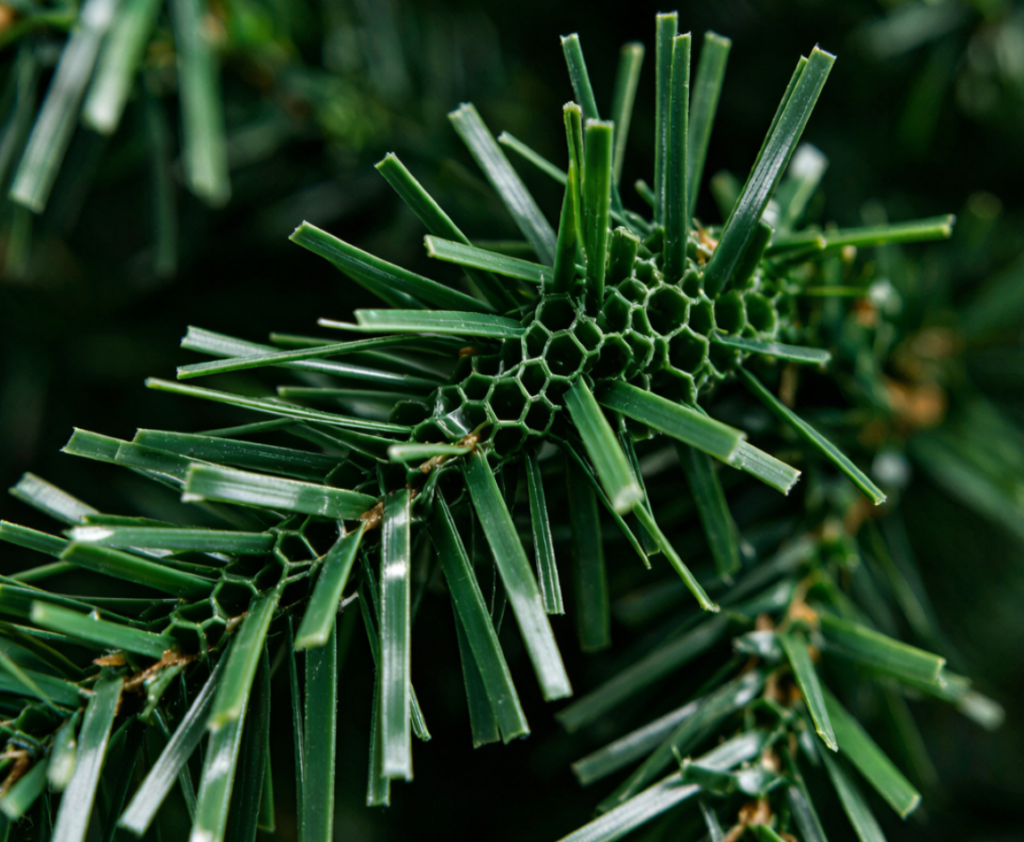
PVC vs. PE Artificial Christmas Trees: An Overview
The main difference between PVC and PE artificial Christmas trees lies in how their needles are made and how closely they resemble natural evergreen foliage.
What Is PVC?
PVC stands for polyvinyl chloride. In artificial Christmas trees, PVC is commonly processed into thin strips that are cut and arranged to resemble evergreen needles. These strips are attached to branches to create the tree's overall shape and coverage.
PVC needles generally have a relatively uniform appearance. They are widely used in artificial greenery because the material can be processed into different shapes, colors, and decorative styles.
What Is PE?
PE stands for polyethylene. Artificial tree needles made from PE are often produced through molding processes that create three-dimensional shapes resembling natural evergreen needles.
Depending on the mold design and finish, PE needles can reproduce more natural-looking contours, dimensions, and textures. This makes PE a popular choice for artificial trees designed to look realistic at close range.
1. PVC Artificial Christmas Trees
PVC artificial Christmas trees are often selected for their relatively economical construction, uniform foliage, and versatility. They are suitable for many decorative applications, particularly when overall coverage and budget are important considerations.
Advantages of PVC Trees
- Budget flexibility: PVC is commonly used in cost-conscious artificial tree designs.
- Uniform appearance: The needle strips create consistent foliage across the branches.
- Versatile styling: PVC can be used in trees with different colors, shapes, densities, and decorative finishes.
- Lightweight construction potential: Depending on the branch structure and overall design, PVC foliage can help keep a tree relatively lightweight.
Limitations of PVC Trees
- Less realistic close-up appearance: Flat PVC strips may look less like natural needles when viewed nearby.
- More uniform texture: The foliage may lack the dimensional variation of molded PE needles.
- Appearance depends on construction: Needle density, color, branch design, and finishing all influence the final result.
PVC may be a practical choice when affordability, decorative coverage, and a consistent appearance are priorities. However, the quality of an artificial tree cannot be determined by material alone.
2. PE Artificial Christmas Trees
PE artificial Christmas trees are often designed to reproduce the shape and texture of natural evergreen branches more closely. Their molded needles can feature three-dimensional contours rather than the flatter appearance commonly associated with PVC strips.
Advantages of PE Trees
- Realistic needle shapes: Molded needles can reproduce the contours and profiles of natural foliage.
- Detailed appearance: Three-dimensional construction can create a more natural look when viewed up close.
- Natural-looking variation: Different molds, colors, and branch arrangements can create more visual depth.
- Premium design potential: PE is often used in artificial trees positioned toward the higher end of the market.
Limitations of PE Trees
- Potentially higher cost: Molded foliage and more elaborate construction can increase manufacturing costs.
- Weight varies by design: The final weight depends on the amount of material, branch structure, and tree size.
- Needle durability varies: Molded branches and needles can be damaged by excessive bending, compression, or improper storage.
PE is worth considering when realistic foliage is a major priority. Buyers should still compare the actual product's appearance, branch density, construction, and care requirements rather than relying on the material label alone.
3. PVC vs. PE Artificial Christmas Trees: Comparison Table
| Factor |
PVC |
PE |
| Needle construction |
Typically cut from thin strips |
Often molded into three-dimensional shapes |
| Visual realism |
Generally more uniform |
Can reproduce more natural needle contours |
| Cost considerations |
Often used in more economical designs |
Often used in higher-priced realistic designs |
| Weight |
Depends on tree size and construction |
Depends on tree size and construction |
| Durability |
Depends on material quality, branch structure, and handling |
Depends on molding quality, branch structure, and handling |
| Appearance close up |
May look flatter or more uniform |
Can offer greater needle definition and depth |
| Best suited for |
Budget-conscious and uniform decorative designs |
Realism-focused decorative designs |
These are general material characteristics, not guaranteed specifications for every artificial tree. Actual performance depends on the product's design, manufacturing process, materials, and quality control.
4. Which Material Looks More Realistic?
PE is generally favored for realistic artificial tree needles because molding can reproduce more three-dimensional shapes and natural-looking contours. This difference is often easier to notice when examining the branches at close range.
PVC needles are typically flatter and more uniform. However, a well-designed PVC tree can still create an attractive overall appearance, especially when the foliage is arranged carefully and combined with suitable colors and branch shapes.
When comparing artificial trees, examine several details:
- Needle shape: Look for the contours and dimensions of individual needles.
- Color variation: Check whether the foliage has a natural-looking range of green tones.
- Branch density: Consider how well the branches fill the tree's silhouette.
- Overall structure: Look at how the branches are arranged and how naturally they extend from the trunk.
- Viewing distance: Decide whether the tree will mainly be seen from across a room or examined at close range.
Material is only one part of realism. Branch design, foliage density, color, and assembly also affect the finished appearance.
5. Durability and Maintenance
Neither PVC nor PE automatically guarantees a longer service life. Durability depends on the quality of the material, the branch and trunk structure, manufacturing standards, frequency of use, and storage conditions.
Maintaining PVC Artificial Trees
- Shape branches gently during assembly and avoid excessive pulling or bending.
- Remove dust with a suitable soft brush or according to the manufacturer's instructions.
- Store the tree in a clean, dry place away from excessive heat and direct sunlight.
- Avoid compressing the branches more than necessary during storage.
Maintaining PE Artificial Trees
- Handle molded needles carefully to avoid damaging their shapes.
- Follow the manufacturer's instructions when shaping branches.
- Keep the tree protected from excessive pressure during storage and transportation.
- Inspect branches and connection points before reassembling the tree each season.
For both materials, carefully compare product construction, warranty terms, storage instructions, and manufacturer quality standards. Avoid assuming a particular lifespan without product-specific evidence.
6. Cost and Long-Term Value
PVC trees are often positioned at more accessible price points, while PE trees may cost more because of their molded foliage and manufacturing requirements. However, prices vary by tree height, density, design complexity, materials, and supplier.
Instead of relying on a single price range or assumed lifespan, compare products of similar size and intended use.
What to Include in a Cost Comparison
- Purchase price: Compare trees with similar dimensions, foliage density, and features.
- Construction quality: Examine the branches, trunk, base, and connection points.
- Storage and transportation: Consider packed dimensions, weight, and handling requirements.
- Maintenance: Review cleaning, assembly, and storage requirements.
- Expected service life: Use manufacturer information and warranty terms where available.
A lower purchase price does not always mean better value, and a more expensive PE tree is not automatically the best choice for every application. The right option depends on the visual quality required and the total cost of ownership.
7. What Are Hybrid PVC and PE Artificial Trees?
Some artificial trees combine PVC and PE foliage. A common approach is to use molded PE needles on visible outer branches and PVC strips in less visible inner areas.
This design can balance a more realistic exterior appearance with the coverage and cost characteristics of PVC. The actual result depends on the proportion of each material, the branch layout, and the overall manufacturing quality.
Potential Advantages of Hybrid Trees
- More realistic-looking outer branches than an all-PVC design may provide.
- Additional foliage coverage from PVC branches in less visible areas.
- A balance between appearance and cost for some product designs.
However, hybrid trees do not all provide the same level of realism or savings. Compare the actual number and placement of PE branches rather than relying on general marketing claims.
8. Fire Safety and Material Selection
Fire safety is an important consideration for artificial Christmas trees and other seasonal decorations. The material name alone does not establish whether a finished product meets a particular fire-safety requirement.
When evaluating an artificial tree or decorative product:
- Check the manufacturer's stated fire-performance information and applicable test reports.
- Verify that any claimed certification applies to the exact product or model.
- Confirm that the product meets the requirements of the intended market and application.
- Follow instructions for lighting, electrical accessories, assembly, and storage.
- Keep decorations away from open flames and other heat sources as directed by the manufacturer.
For information about product safety certification, visit UL Solutions. Do not assume that every PVC or PE product is certified or flame-retardant without checking the relevant product documentation.
9. Custom Christmas Decorations for B2B Projects
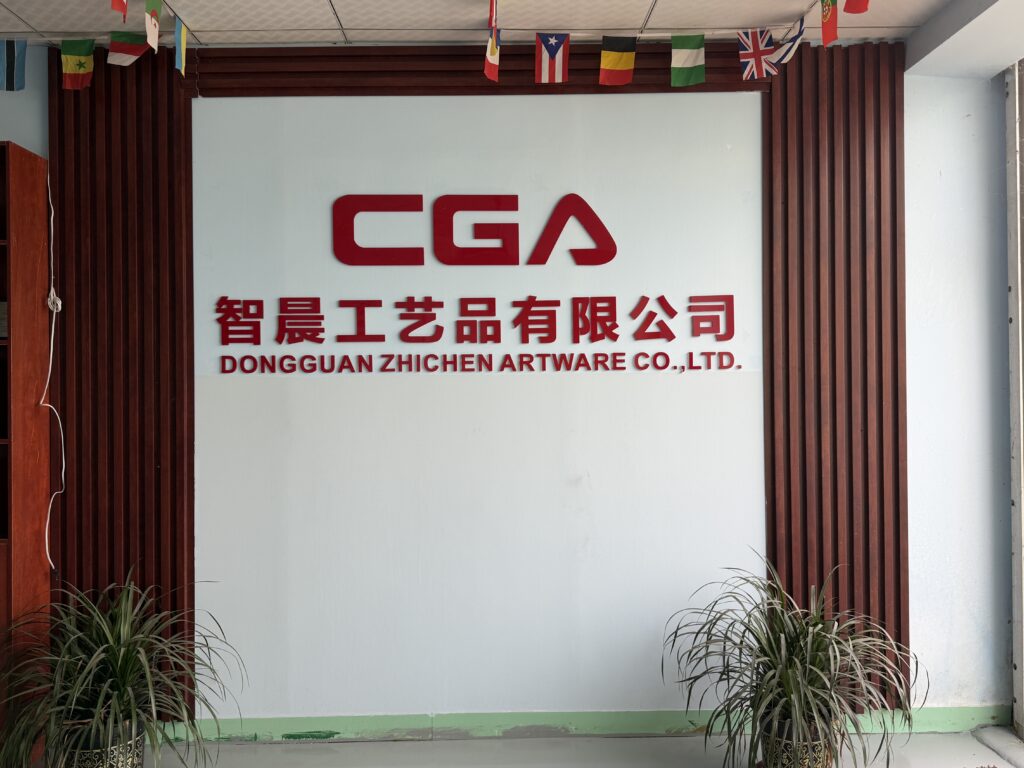
Developing a distinctive Christmas decoration collection for your brand or seasonal project? CGA (Zhichen Artware) specializes in B2B bulk custom Christmas decorations, including glass Christmas balls and uniquely shaped decorative ornaments.
Although PVC and PE are commonly discussed in relation to artificial tree foliage, material selection is also important across the wider seasonal decoration industry. For custom ornaments, the appropriate material depends on the desired shape, surface finish, visual effect, durability requirements, and production process.
CGA works with buyers on decorative product concepts, reference samples, shapes, colors, finishes, and other project-specific requirements. For selected ornament designs, small lighting elements may also be incorporated as decorative accents within the finished product, subject to design feasibility and applicable safety requirements.
Our focus is on custom decorative products rather than manufacturing or selling complete artificial Christmas trees. Lighting elements, where suitable, are integrated into the finished ornament and are not sold separately as LED lights or light strings.
Explore CGA Christmas Decorations | Discuss Your Custom Project
Frequently Asked Questions
Which is more realistic, PVC or PE?
PE generally offers more realistic-looking needle shapes because its foliage is often molded into three-dimensional forms. PVC needles tend to look flatter and more uniform. Actual realism depends on the product's design, color, density, and construction.
Which material is cheaper, PVC or PE?
PVC is often used in more economical artificial tree designs, while PE trees may cost more because of their molded foliage. Actual prices vary according to size, density, quality, and supplier.
Which artificial tree material lasts longer?
Neither material guarantees a longer lifespan. Durability depends on manufacturing quality, branch construction, handling, frequency of use, and storage conditions. Check product-specific warranty and care information.
What is a hybrid PVC and PE Christmas tree?
A hybrid tree combines PVC and PE foliage, often using PE on visible outer branches and PVC in less visible inner areas. This approach can balance appearance and cost, although the results vary by design.
Are PVC and PE artificial Christmas trees fire-safe?
Fire performance depends on the finished product, material formulation, testing, and applicable requirements. Check the manufacturer's documentation and verify any claimed certification for the specific model. Neither material should automatically be assumed fire-safe or certified.
Can PVC and PE be used for custom Christmas ornaments?
Material suitability depends on the ornament's intended shape, appearance, surface finish, manufacturing method, and performance requirements. Different materials may be appropriate for different decorative products, so the design should guide the selection.
Conclusion
PVC is commonly chosen for its uniform appearance and cost-conscious applications, while PE is often preferred when realistic needle shapes and textures are important. Hybrid designs combine both materials to balance appearance and cost.
The best choice depends on the product's intended use, visual requirements, construction quality, and overall budget. For businesses developing seasonal collections, carefully selected materials, distinctive shapes, and suitable decorative finishes can help create Christmas ornaments that stand out in retail and commercial displays.